Tailings reprocessing · Mineral recovery · Rehabilitation
Green value.Not new mines.
A South African, transaction-driven mineral recovery platform that reprocesses historical dumps, tailings and low-grade stockpiles — material already drilled, blasted and milled.
Who We Are
Turning historic mine waste into new mineral value.
Aquarius Capital Mining (Pty) Ltd is a South African, transaction-driven mineral recovery platform focused on reprocessing historical dumps, tailings and low-grade stockpiles.
We connect patented magnetic separation technology, resource geology, engineering execution and project finance to recover value from material that is already above ground — and to shrink the legacy footprint while doing it.
Mining + Technology + Capital
A resource already at surface
The material has not changed. The technology available to process it has.
Existing dumps can represent both a reservoir of unrecovered minerals and a long-term obligation for their owners.
The Opportunity
A resource already at surface
Three things changed the arithmetic on legacy material.
Residual value
Historical processing left recoverable mineral fractions in fines, slimes and discarded stockpiles.
Ongoing cost
Legacy tailings can require continuous monitoring, management, environmental controls and financial provisioning.
New technology
Advances in rare-earth permanent magnets open new opportunities to recover weakly magnetic and fine material.
The Technology
Ultra-high-intensity magnetic separation
Using advanced rare-earth magnetic circuits to upgrade minerals that conventional processes may leave behind.
Gauss operating range cited for high-intensity circuits.
Fine & ultra-fine
Capture of smaller particle fractions and weakly magnetic minerals.
Dual strategy
Recover a high-value concentrate, or remove impurities to upgrade the bulk material.
Site-specific mineralogy and metallurgical testing determine the appropriate circuit configuration.
Engineering & Execution
Purpose-built. Modular. Deployable.
ACM's operating model draws on in-house plant engineering, resource geology and a licensed magnetic separation platform.
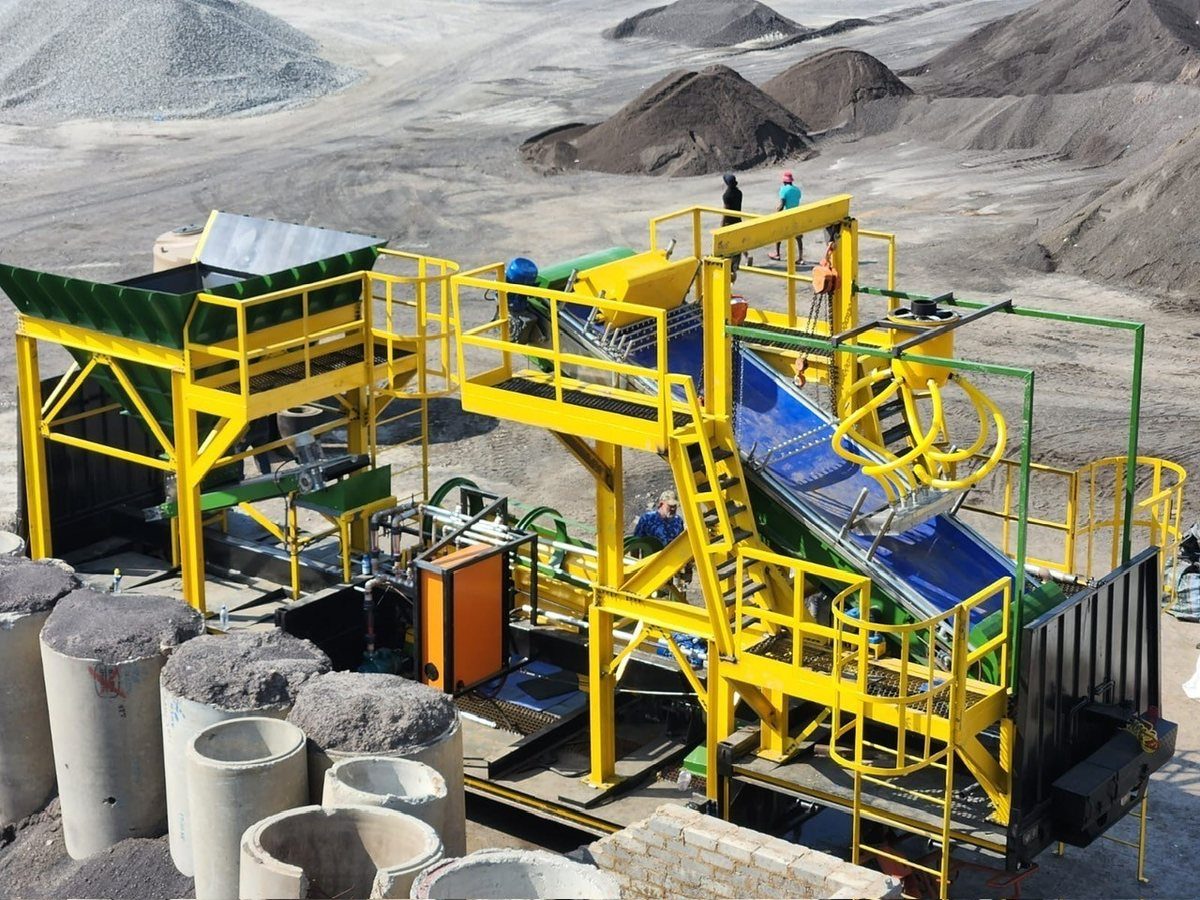
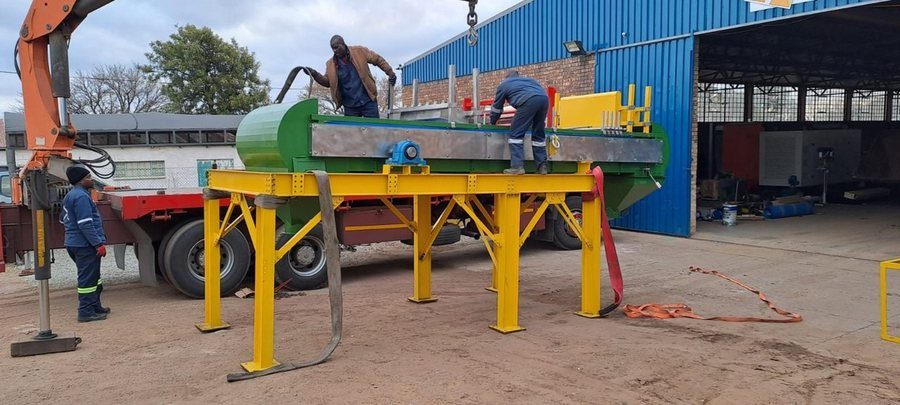
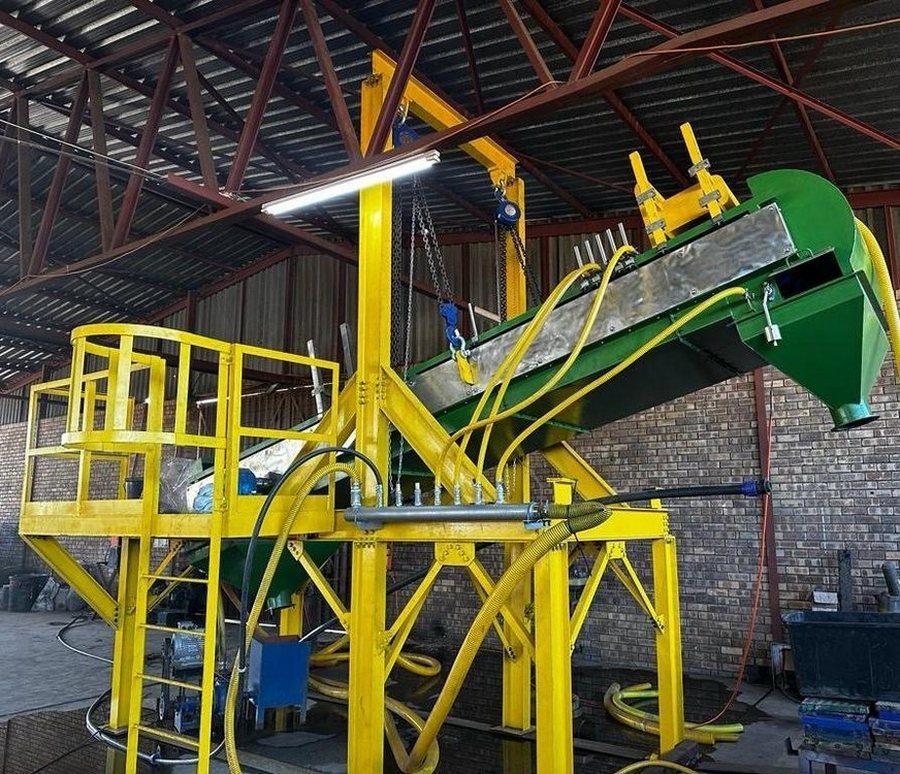
Processing units can be configured around the feed and integrated, where suitable, with existing site infrastructure.
Materials
Already drilled, blasted and milled
The platform has demonstrated applicability across a range of commodities and material types, each tested on its own merits.
Iron Ore Tailings
Hematite- and magnetite-bearing material
Chrome Tailings
Chromite fines, spiral tails and middlings
Manganese & Iron
Multi-metal material with payable Mn and Fe
Nickel-Bearing
Residues and low-grade stockpiles
Cobalt-Rich Dumps
Legacy dumps and historical discard
Slimes Dams
Fine and ultra-fine fractions in slurry
Discard Stockpiles
Material rejected by older circuits
Low-Grade Ore
Material below the primary cut-off grade
Selected Test Work
Iron ore: repeatable upgrading
Independent metallurgical datasets reported iron-ore concentrate grades in the mid-60s Fe range from materially lower-grade feeds.
Selected concentrate grades across multiple independent datasets.
Independent iron-ore test series reported in the rollout proposal.
Fe recovery in a hematite scoping test, at a chemical yield of 64.9%.
Product quality
In the cited samples, upgraded iron-ore products met the AMSA benchmark of at least 63% Fe, with silica reduced to between 0.9% and 3.5% — subject to the documented assay conditions.
Laboratory and scoping results only. Recoveries, yields and economics must be confirmed for each site during representative testing and the on-site proof of concept.
Selected Test Work
Chrome and impurity removal
The platform can be configured to recover target minerals, or to selectively reject material that reduces final product quality.
Chromite
Cr2O3 content in a reported single-circuit Consulmine / IMEC test — approximately a 2.6× grade upgrade, with silica falling from 31.72% to 13.41%.
Silica rejection
Reduction in silica reported in selected iron-ore test work — sample-specific impurity removal, not a universal performance guarantee.
Proof of concept is commodity-specific and must be validated against independent laboratory assays and the owner's market specifications.
The Operating Model
A proof of concept on your material
Before any large-scale capital commitment, ACM proposes to mobilise a test plant to the partner's own site.
Indicative on-site test programme, run on the partner's own feed, water and power.
Sample and process representative feed
Assay feed, product and tailings independently
Measure grade, recovery, throughput and operating inputs
Deliver an evidence-based POC report for investment decisions
Prove the site · Establish economics · Build a bankable case
Stage-Gated Execution
From screening to scale
Each project advances through evidence-based decisions, reducing technical and commercial uncertainty before further investment.
Historical data review and site prioritisation
Representative laboratory validation
Three-month on-site proof of concept
Life-of-dump model, financing and agreements
Install and commission modular units
Tune recovery, throughput and product quality
Repeat the process at further qualifying dumps
Either party may stop at a gate. Nobody is committed beyond the phase under way.
Commercial Partnerships
Structures aligned to the asset
ACM can work with site owners and capital partners through different project structures, tailored to the material, risk allocation and funding requirements.
Capital Partner & Dump Acquisition
A capital provider funds the reprocessing project. The asset owner receives consideration for the dump — an agreed portion at close and the balance as the material is mined — while ACM leads technology implementation and operations.
Asset-Backed Joint Venture
The site owner contributes mineral material and agreed resources or funding; ACM contributes technology, technical capability and execution under a negotiated joint venture. An introduction partner can be accommodated in either structure.
The objective is a clear alignment between capital, operational responsibilities, mineral ownership and environmental outcomes.
Environmental Impact
Rehabilitation through reprocessing
Commercial mineral recovery and environmental rehabilitation can reinforce one another when programmes are designed and permitted responsibly.
Less legacy material
Recover saleable concentrate from existing dumps and stockpiles.
Smaller residual footprint
Potential to consolidate residues and reduce legacy dump volumes.
Lower primary disturbance
Process material already above ground rather than opening a new pit.
Measurable progress
Track tonnes removed, concentrate recovered and rehabilitation milestones.
Any change to rehabilitation provisions or closure obligations requires site-specific assessment, independent review and applicable regulatory approvals.
Why ACM
The Aquarius difference in mining
Why owners, boards and financiers bring us their dumps.
Proven test-work basis
Documented laboratory programmes across several ore bodies and commodities.
Technology-linked execution
Access to patented separation technology and in-house plant engineering.
Independent validation
Third-party sampling and assays are central to the site-level proof of concept.
Financial discipline
Stage-gated investment decisions backed by site-specific technical and financial modelling.
Commercial flexibility
Asset acquisition and joint-venture structures tailored to owners and funders.
Precision. Discipline. Results. No exceptions.
Our Leadership
Four disciplines. One delivery team.
ACM's founding directors bring legal and commercial structuring, plant engineering, resource geology and corporate finance into one operating platform.
Pieter Fourie
Director
Corporate and commercial law, contractual frameworks and technology IP alignment. Shareholder in the patent-holding company.
Johannes Lubbe
Technical Director
Mining entrepreneur; owner of Sparks Met — plant manufacturing, installation and mineral recovery equipment.
Michael van den Heever
Resources Director
Resource and production geologist; experience across iron ore, copper and gold. Formerly Kumba Iron Ore.
Roelof Lategan
Commercial Director
Founder of Aquarius Capital; finance structuring, funding execution and strategic partnerships.
Let's turn legacy material into value.
Aquarius Capital Mining (Pty) Ltd
Roelof Lategan | Commercial Director
Technical enquiries — Johannes Lubbe, Technical Director